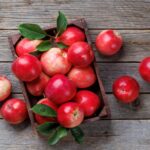
Simple Cider ('El Diablo')
Flavor Profile: Semi-Sweet, deepapple flavorA very simple but delicious hard cider that sneaks up on you....hence the name.Cider is not only an enjoyable drink in season and provided variety in daily nourishment in the lives of medieval people, but it also is an intermediate step in the production of vinegar used for antiseptic properties and gut health. I make cider for the enjoyment of my friends and family. The name ‘El Diablo’ was given to this particular type of cider due to its effect on the drinker. I also like to use this recipe when making vinegar, because of its simplicity.As long as there have been apples growing in Europe, there have been fermented apples. Just add water and voila! Cider! In his book Cookery and Dining in Imperial Rome (originally Apicius de re Conquinaria ca. 900 CE), Apicius describes the storage of apples and other fruits in honey without touching each other to preserve them, presumably to prevent rot and fermentation. Fruits with skins have naturally occurring yeast on, which, when the skins are broken, will immediately ferment the sugars inside the fruit. Grapes have been cultivated for millennia and have an astonishing amount of sugar in each piece of fruit as a result. When left alone, ripe fruit will fall, and ferment itself. Harvested fruit does not ferment unless it is allowed to ripen to the point it breaks open. Other fruits, while having less sugar than grapes, often grow better in one area or another due to climate or geographic conditions.My materials are simple modern processed apple juice, chosen for lack of sulfites or other ingredients which would kill the yeast trying to ferment the sugars in the juice. Apples are a type of fruit grown and harvested all over the world and are easy to work with. It could be possible to obtain fruits from specific regions to understand if different varieties produce different flavors. I expect they do, because cidermaking regularly refers to blending apples before processing for crushing Other fruits could be used, such as hawthorn fruit found in the oldest alcoholic drink to date, but it is difficult to obtain. Many other fruits such as cranberries are finicky.
Servings: 42 12 oz bottles
Equipment
- 1 Fermenter/Carboy 5 - 6 gallon sanitized
- 1 Long stir spoon plastic, sanitized
- 1 Fermentation lock
- 1 Hydrometer
Ingredients
- 4 96 oz Unsweetened Apple Juice, room temp (commercial, pasteurized)
- 5 12 oz Frozen Apple Juice Concentrate (commercial, pasteurized)
- 1 tbsp Malic Acid
- 1 tbsp Fermax Yeast Nutrient
- 1 tbsp Pectic enzyme
- 1 pkg Mangrove Jack M02 Cider Yeast
Ingredients in Period
- Juice from crushed apples (yeast on skins)
Instructions
- Add apple juice to clean, sanitized fermenter
- Stir in cans of frozen concentrate
- Add malic acid, pectic enyme, and yeast nutrient. Mix well
- Pitch yeast on top
- Check original gravity using hydrometer and record
Notes
Method
- Making cider, I have learned that the particular yeast used can contribute a cleaner flavor to the finished product, and that I much prefer a yeast that stays out of the way and allows the apple flavor to live its best life. For that, I choose Mangrove Jack’s M02 cider yeast.
- Preparation is simple with addition of apple juice to the fermentor, and the frozen apple juice concentrate stirred in. Likewise, the malic acid, pectic enzyme, andyeastnutrient are simply stirred in also. Finally, yeast is pitched on top.
- Original gravity was 1.065, for 8.8% potential alcohol in the batch I started on 1/22/2025. At racking, the yeast had consumed all the sugar (hydrometer reading 1.000), so I added two more containers of frozen apple juice concentrate. This produced the very sweet apple flavor that I am looking for in this drink, with a final ABV of 8.8%.
- I generally get around 7.3% to 7.6% ABV in primary fermentation. When my final ABV is over 8.0%, I call it 'Imperial Cider' using the modern standard.
- Patrick McGovern. Uncorking the Past. (University of California Press, 2009) 142-143.
- Aymeric Picaud's Pilgrim's Guide (circa 1134): In the Codex Calixtinus, Aymeric Picaud, a French pilgrim, documented that the Basques were notable for growing apples and consuming cider during his travels.
- Saxon Chronicles (before 1066): These chronicles reference cider-like beverages and the production of a drink called "æppelwīn," an Old English term meaning "apple wine," indicating the fermentation of apples into an alcoholic beverage.
Nutrition
Serving: 12oz