A braggot for the times…Chaucer’s time!
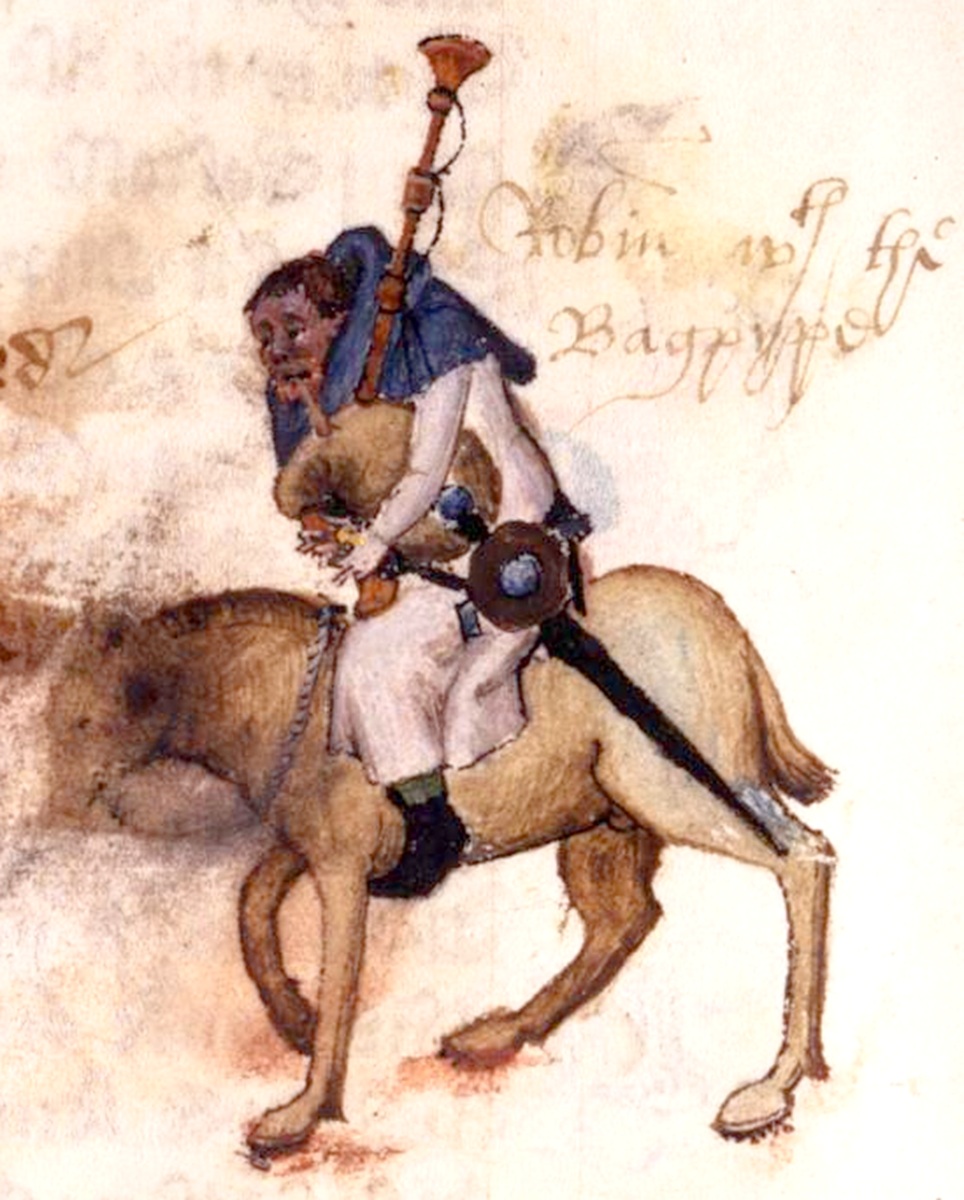
Geoffrey Chaucer, the famous 14th c poet, wrote about the beverage called braggot in the ‘Miller’s Tale’ in the 1380s-1390s, including it in his second tale of the famed Canterbury Tales.
Inspired by this fun and bawdy tale, I wanted to capture the spirit of the drink using my modern equipment, kitchen and environs, while using as period a process and ingredients as possible.
First brewed January 24, 2025 for the Royal Brewer Competition, Kingdom of Atlantia, SCA Inc.
Background
Braggot has had many names and spellings through time: bragot, brackett, bragget and the Welsh bragawd. Whatever it was called, braggot in Chaucer’s time was described as a sweet drink. In the ‘Miller’s Tale’, Chaucer tells the humorous story of a carpenter and his young wife. Chaucer extolls the amazing traits of the wife, stating that:
3261 “Hir mouth was sweete as bragot or the meeth, (Her mouth was sweet as braggot or mead,)
3262 Or hoord of apples leyd in hey or heeth. (Or a hoard of apples laid in hay or heather.)”1
This citation inspired me to delve further into the definition and composition of braggot that would have been made around the late 14th century. What I found was that braggot is a delicious, sweet, spicy mixture that is ale but so much more! Braggot tastes of malt, honey, and the spices used, and to a discerning palate, hints of the type of malted grain, variety of honey, and balance of the spice blend all play a part.
The Project
About Braggot
I began by looking at period sources and recipes for braggot, of which there were several. While some modern recipes describe braggot as an ale brewed with honey added during primary fermentation to increase the fermentable sugar, I found many more sources defining braggot as an already fermented ale that was then back-sweetened with honey and spices.
In his Jewel House of Art and Nature, Sir Hugh Plat (1594)2 gives detailed instructions on making a hogshead of braggot using 54 gallons of ‘strong new ale’ and 9 gallons of honey, along with a variety of spices (64-65). Sir Thomas Cogan’s The Haven of Health3, said to be written in 1584, instructs ‘Take three or foure galons of good Ale or more as you please, two dayes or three after it is cleansed, and put it into a pot by itself, then draw forth a pottle thereof, and put to it a quart of good English Hony…’ (267-268). Both Plat and Cogan clearly discuss adding honey and spices to ale, which would be a product already gone through primary fermentation.
Both of these recipes were recorded 250 or more years after Chaucer’s time. I wanted to find a source closer to 1380. Thomas Wright, who compiled the Dictionary of Obsolete and Provincial English in 1880 refers to a 14th century unnamed manuscript that describes braggot as blending ale, ‘fyne’ wort, honey, pepper, and other spices4. Then I found the Curye on Inglysch: English Culinary Manuscripts of the 14th Century edited by Hieatt and Butler5.
Finally, I found several excellent articles written by Susan Verberg (in the SCA, Elska á Fjárfelli, OL). One in particular, titled ‘Period Braggots – Sweetened Ale, or Malted Mead?’6, contains her translations of the recipes mentioned above, as well as several others. From the number of well documented sources and methods in period, braggot was a commonly consumed and well-loved drink.
Back to Chaucer
The mention of apples and heather in the ‘Miller’s Tale’ gave me further ideas about how to make the project interesting. Heather was a common additive to Scottish ales back into the Neolithic period,7generally as a bittering agent for flavor, but as an herb it also imparted antiseptic properties later found in hops. More than one legend regarding heather as a secret ingredient in ale was told in medieval Scotland8, but from Chaucer’s association of apples in heather, I felt it would be a great addition to my ale, so I decided to use heather as the defining herb. As my first use of heather in brewing, I was interested to see what qualities it would bring.
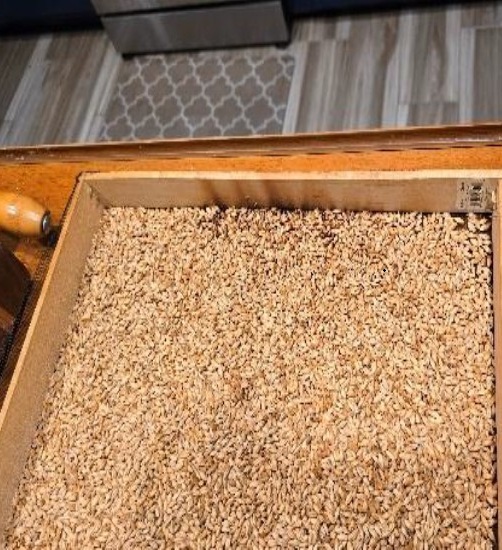
As for the ‘apples’, during the Middle Ages, malting of grain to prepare it for use in brewing was done in malthouses or malting kilns9, where fires were built to dry the grain using whatever wood was available. Apples were clearly available in Chaucer’s England, and the wood of a dead apple tree might well have been used to fire a nearby malthouse. Modern kilning keeps smoke away, but at the time, smoke would have been unavoidable with the heat for drying malt applied directly beneath the malting floor and possibly a flue allowing smoke into the kiln. Since apples were mentioned by Chaucer but not included as an ingredient in any of the braggot recipes, I decided to smoke a portion (1.5 pounds) of the base malt (2 row European barley) in my home smoker using applewood chips to add flavor and depth to my braggot.
Ingredients
The Ale:
9 pounds 2 row malt*
1.5 pounds 2 row malt* (smoked w/ applewood)
1 pound honey malt*
½ pound carapils malt*
½ pound crystal 20 malt*
Dried heather tips, 2 oz
Irish Moss**
1 tablespoon fermax yeast nutrient Safale S-04 English Ale yeast packet***
The Braggot:
3 lb Raw honey
3.0 tsp dried ginger
1.0 tsp fresh ginger
2.5 tsp cinnamon
1.5 tsp ground clove
1.5 tsp pepper (long)
2.5 tsp nutmeg
Notes about period ingredients:
* The word ‘malt’ in the list above refers to the types of malted barley I chose. These are easily available in brew stores today. One type of malted grain typically used for brewing through the Anglo-Saxon era and well into in the 14th century would have been barley. Although other grains such as wheat and oats were used in making ale in Chaucer’s time10, I chose a barley blend that I thought would enhance the flavor of the ale as well as the finished braggot.
** Irish moss is used as a clarifying agent (also known as ‘fining’). In period, the white of an egg (Wright, 725) would have been used to ‘parel’ (clarify) wine, ale, or other consumable.
*** Yeast in Chaucer’s time would have been added for primary fermentation by using leftover barm from a previous batch of ale11. Barm is typically obtained from the bright white foam which rises to the top during primary fermentation. When making this ale, I did not have anything in primary fermentation at the time, so I decided to use active yeast. I prepared a starting solution using 300 mL of water, a teaspoon of yeast nutrient, and a packet of Safale S-04.
The Process
Part I: Make the Ale
a. This was the first use of my new smoker to smoke malt. I used applewood chips as an homage to the ‘apples’ in ‘The Miller’s Tale’. I built my own frame and screen to hold the malt in the smoke, then smoked the grains for three hours. I was very pleased with the resulting flavor.
b. I generally use 1.2 quarts of mash water per pound of grain to produce a nice thick mash, with the grain absorbing a significant portion of the water in the process. I used 3.5 gallons of water in this mash. The reason for using a smaller amount of water was to allow the available amylase enzyme to find the starch for effective conversion. The mash proceeded at 149 degrees for an hour, finishing at 144 degrees. Because the temperature outside had fallen below twenty degrees Fahrenheit, I moved indoors to complete the mash and to begin the boil on the stove, instead of my normal method using a propane burner outdoors.
c. Boiling proceeded for an hour after hot break, with 2 ounces of heather tips added fifty minutes into the boil, along with the Irish moss.
d. After cooling overnight, Safale S-04 yeast and yeast nutrient was added to start the fermentation. The cooling overnight is a departure from my normal use of a modern cooling apparatus, the immersion chiller. The implication for the beer would be a little less clarity in the finished product, while being closer to a period process. With that mass of hot water, it will stay hot for a long time (about a day). The original gravity (OG) reading was 1.046.
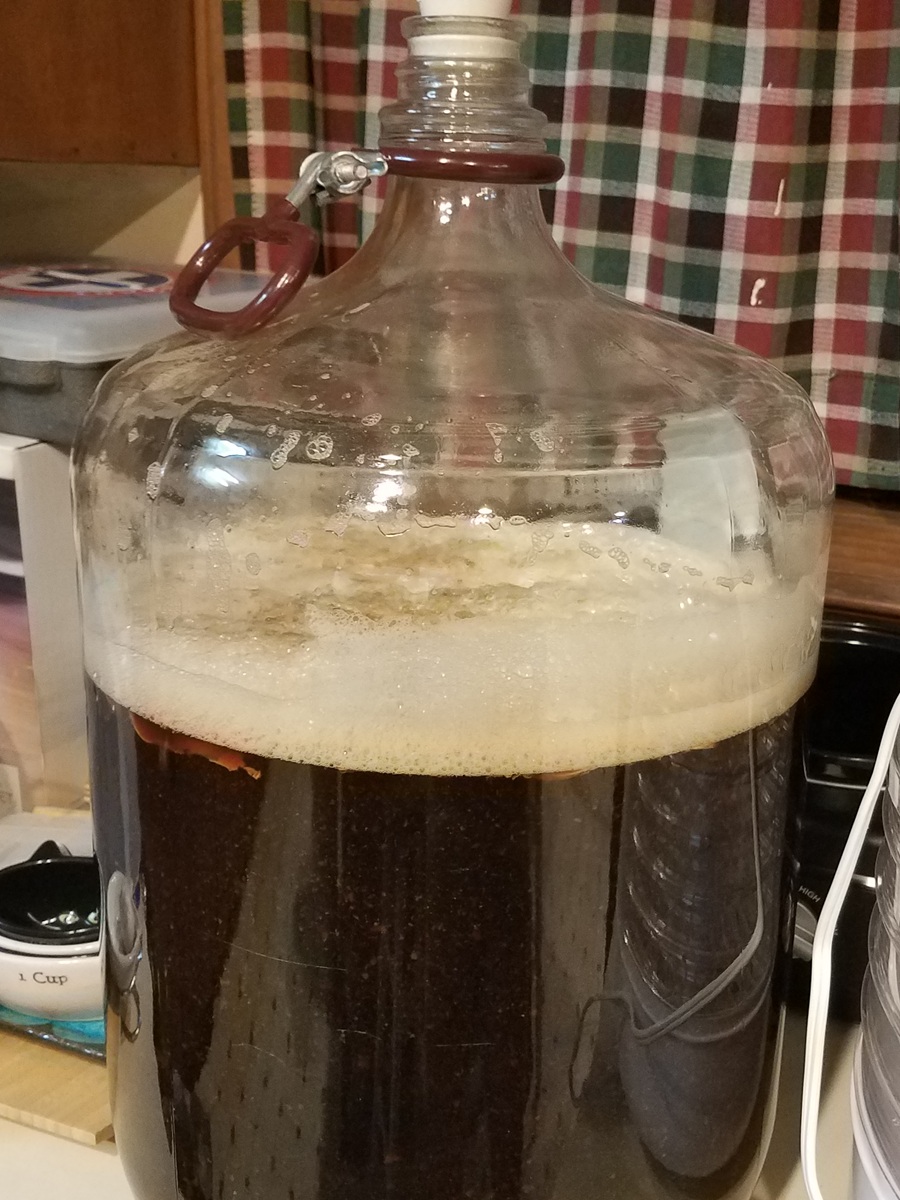
e. I allowed primary fermentation to proceed for one week, racked the ale and got a reading of 1.006, then let secondary fermentation proceed for 9 days, and the finishing reading was also 1.006 for a final ABV of 5.4%.
Part II: Make the Braggot
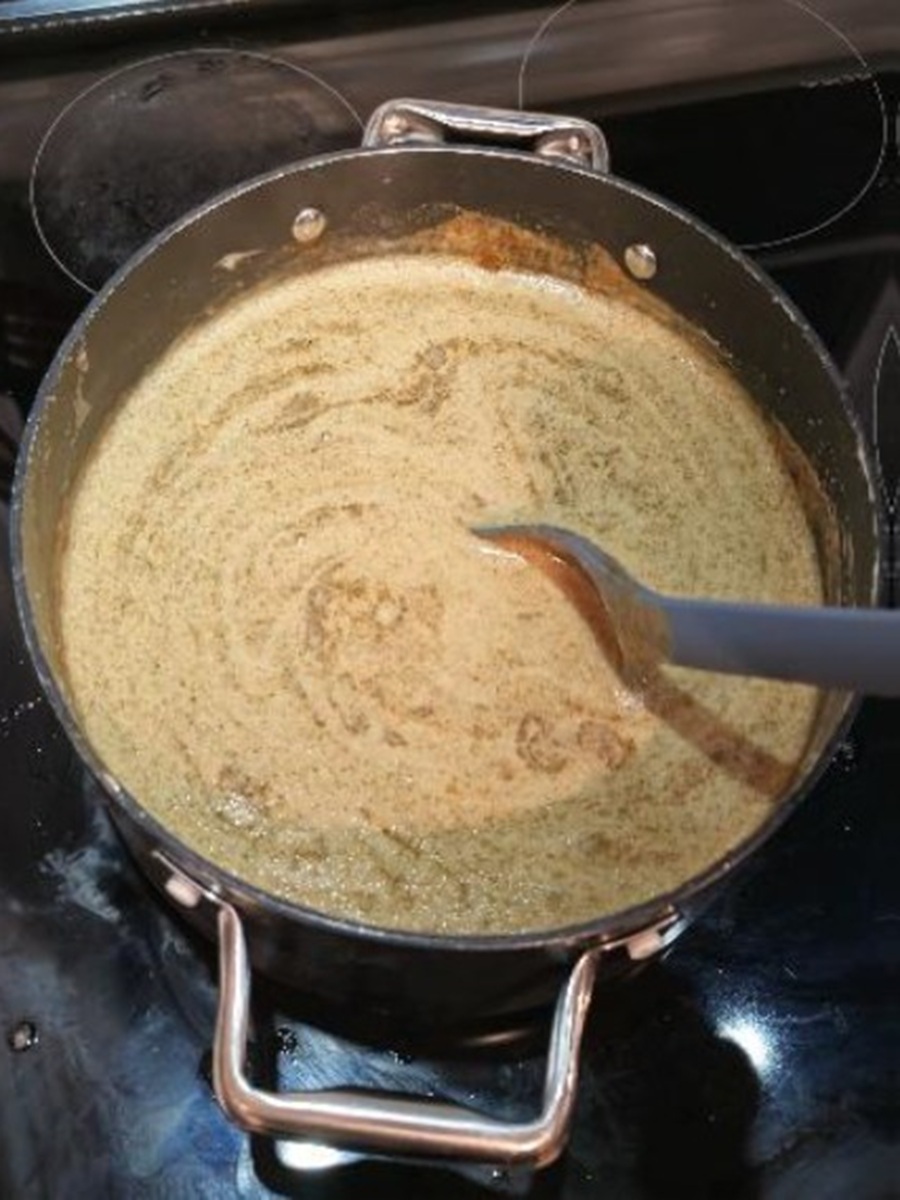
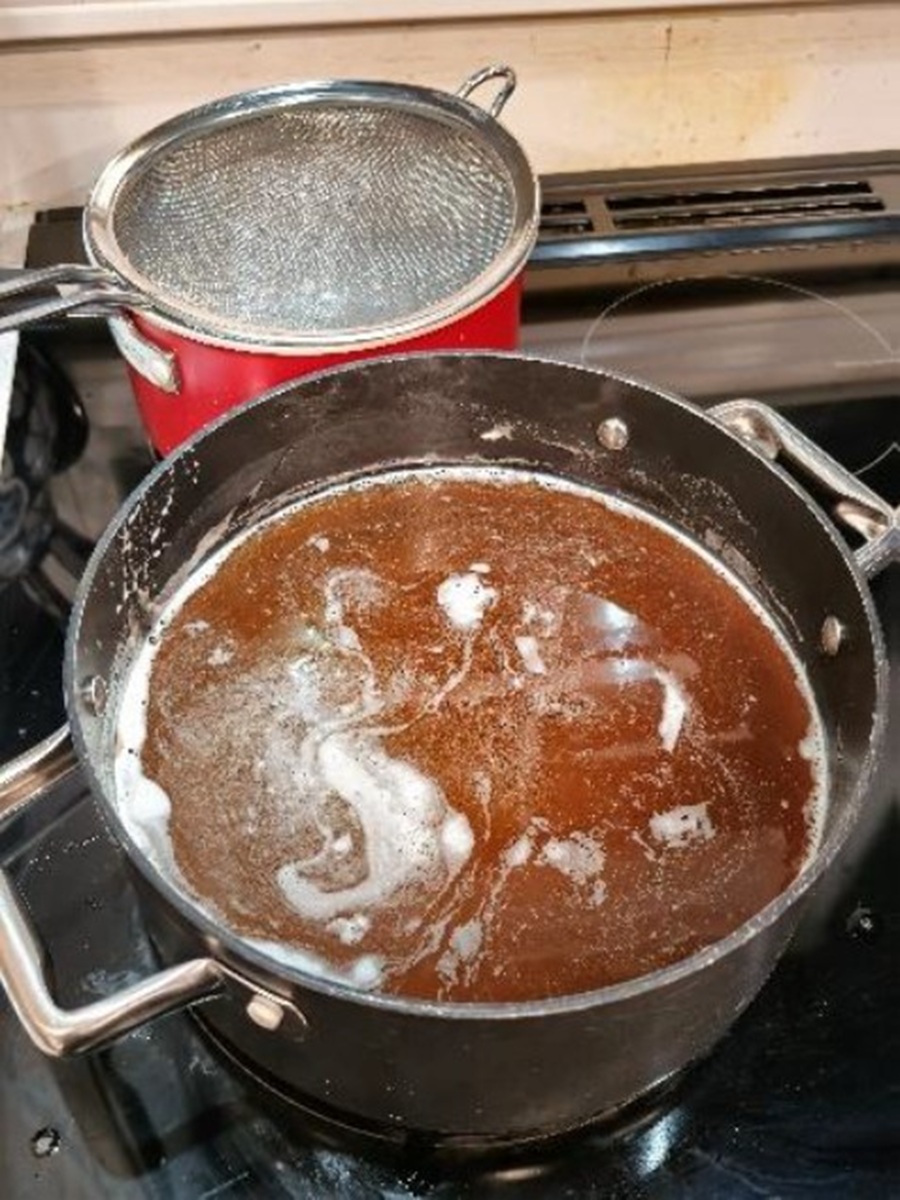
a. First, I put the honey in a pot and brought it to a slow boil, skimming off the foam and bits as mentioned in Cogan’s ‘Haven of Health’.
b. I then added the spices (listed above), and mixed well, keeping the mixture warm to release the spice flavors but not burning the honey.
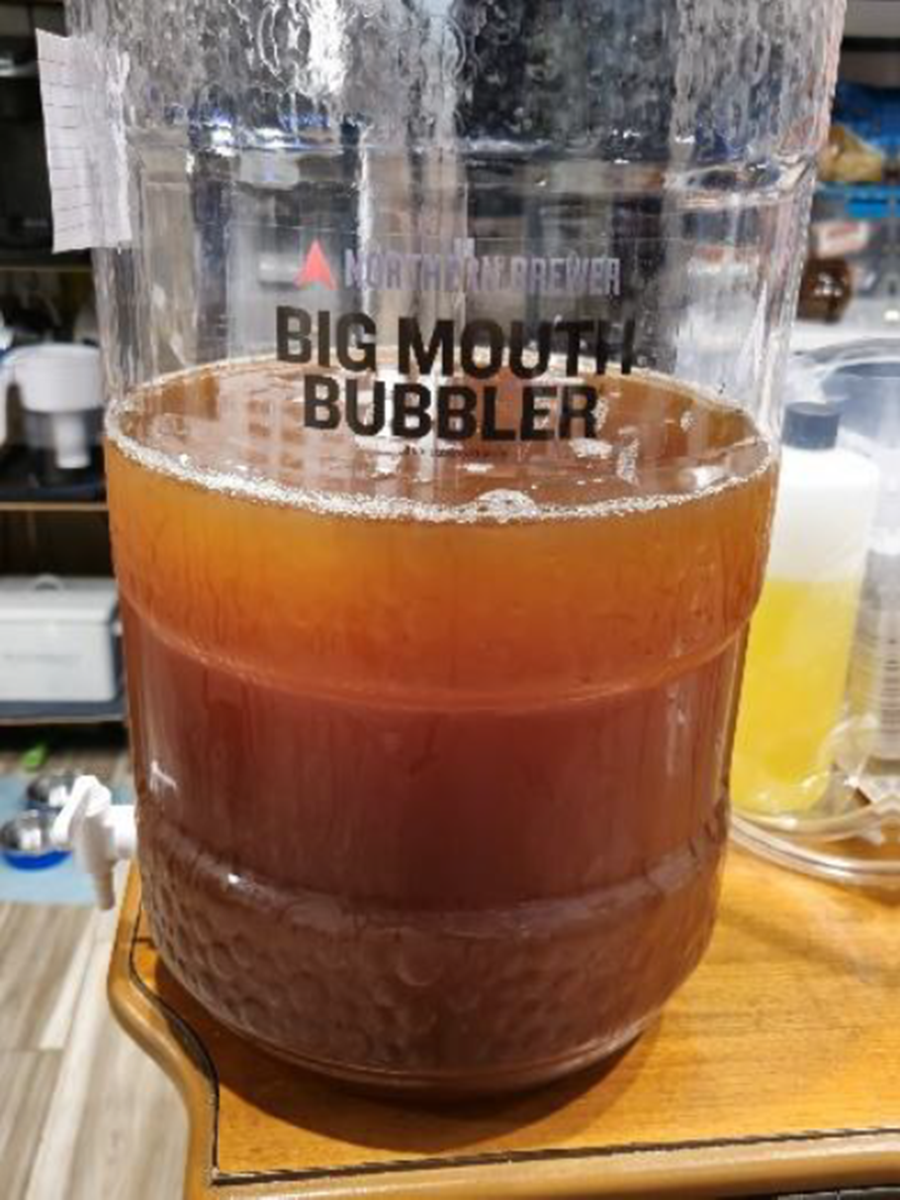
c. I then siphoned off one gallon of ale and added it to the spice/honey mixture and simmered for about 15 minutes. Once it was cool, I added the mixture back into the ale.
Conclusion
This braggot turned out very well, in my opinion. The complexity of the extra steps created a more interesting experience, and I found the resulting drink to be exactly what I intended: a sweet, spicy, flavorful drink. Although I have brewed many types of beer, cider, mead, and other drinks, this was my first braggot. I intend to make this a regular brew. The next batch I make, I will do two things differently:
1. Perform the second step upon first rack. Braggot would have been drunk fairly quickly, and because there was no change between specific gravity, the second racking was unnecessary, although it probably made for a more settled product.
2. Reduce clove by a teaspoon so that the other flavors come through more clearly.
Footnotes
- Harvard University. “The Miller’s Prologue and Tale.” Chaucer: The Canterbury Tales. Accessed January 18, 2025. https://chaucer.fas.harvard.edu/pages/millers-prologue-and-tale. ↩︎
- Plat, Sir Hugh. ‘The Jewell House of Art and Nature, conteining divers rare and profitable Inventions, together with sundry new Experiments in the Art of Husbandry, Distillation and Moulding. By Hugh Platte of Lincolnes Inn, Gent.,’ London: 1594. Reprinted London 1653. P. 64 ↩︎
- Cogan, Thomas. The Haven of Health. Chiefely gathered for the comfort of Students, and consequently of all those that have a care of their health. London: 1584. Reprinted London: 1636 pp. 267-268.
To Make Bragget: Take three or foure galons of good Ale or more as you please, two dayes or three after it is clensed, and put it into a pot by it selfe, then draw forth a pottle thereof, and put to it a quart of good English Hony, and set them over the fire in a vessell, and let them boyle faire and softly, and alwayes as any froth ariseth , skumme it away and so clarifie it, and when it is well clarified, take it off the fire, and let it coole, and put thereto of Pepper a penny worthy, Cloves, Mace, Ginger, Nutmegs, Cinamom, of each two penny-worth beaten to powder, stir them well together and set them over the fire to boyle againe a while, then being milke warme, put it to the rest, and stirre all together and let it stand two or three daies, and put barme upon it, and drink it at your pleasure. ↩︎ - Wright, Thomas Esq. Dictionary of Obsolete and Provincial English: Containing Words from the English Writers Previous to the Nineteenth Century Which Are No Longer in Use, or Are Not Used in the Same Sense, and Words Which Are Now Used Only in the Provincial Dialects. Vol. 2. London: G. Bell, 1880–1886. Pp. 247 – 248.
Wright defined ‘braget/braggat/bragot as ‘A sort of beverage formerly esteemed in Wales and the West of England’. He included in his definition two recipes, one dating to an unnamed 14th-century manuscript:
“To make a Bragotte Take x galons of ale, iij potell of fyne worte, and iij quartis 6 of hony and putt therto canell Ʒ iiij. Peper schort or long, Ʒ.iiij galingale, Ʒ. J. and cowys, Ʒ.j. and gingiver Ʒ.ij.” ↩︎ - Hieatt, Constance B., and Sharon Butler, eds. Curye on Inglysch: English Culinary Manuscripts of the 14th Century (Including Forme of Curye). Early English Text Society. London: Oxford University Press, 1985. Part V, Goud Kokery, MS Royal 17. A. iii. ↩︎
- Verberg, Susan (Elska á Fjárfelli, OL). A Booke of Secretes. 2017. “Period Braggots — Sweetened Ale, or Malted Mead?,” January 20, 2017. https://bookeofsecretes.blogspot.com/2017/01/period-braggots-sweetened-ale-or-malted.html ↩︎
- McGovern, Patrick. Ancient Brews: Rediscovered and Recreated. New York: W. W. Norton and Company 2017. Pp. 152-153 ↩︎
- Horvath, Cristina. “The Secret of Heather Ale – Fiion an Fhraoich.” University of Edinburgh Blogs, August 24, 2022. Accessed January 10, 2025. https://blogs.ed.ac.uk/garg/2022/08/24/the-secret-of-heather-ale-fiion-an-fhraoich/ ↩︎
- Jervis, B. (2023) Accessed January 10 2025. “Brewing difference: malting, gender and urbanity in medieval England. An examination of drying and malting kilns, c.1150–1500”. Journal of Medieval History, 49(5), 680–700. https://doi.org/10.1080/03044181.2023.2253807 ↩︎
- Bennett, Judith M. Ale, Beer, and Brewsters in England: Women’s Work in a Changing World, 1300–1600. Oxford: Oxford University Press, 1996 p.17 ↩︎
- Chisholm, Hugh, ed. (1911). “Barm”. Encyclopædia Britannica. Vol. 3 (11th ed.). Cambridge University Press. p. 407. ↩︎
© Curtis F. Carrington. All rights reserved.